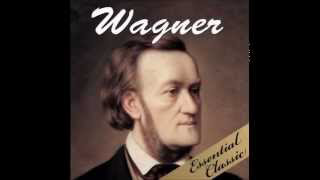
The Best of Wagner

gravy
Published on May 13, 2021
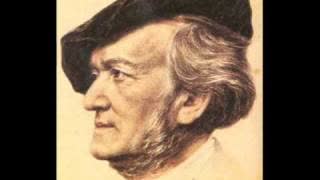
The Best of Wilhelm Richard Wagner (22 May 1813 -- 13 February 1883)
Wagner's compositions, particularly those of his later period, are notable for their complex textures, rich harmonies and orchestration, and the elaborate use of leitmotifs—musical phrases associated with individual characters, places, ideas or plot elements. His advances in musical language, such as extreme chromaticism and quickly shifting tonal centres, greatly influenced the development of classical music. His Tristan und Isolde is sometimes described as marking the start of modern music.
Wagner had his own opera house built, the Bayreuth Festspielhaus, which embodied many novel design features. It was here that the Ring and Parsifal received their premieres and where his most important stage works continue to be performed in an annual festival run by his descendants. His thoughts on the relative contributions of music and drama in opera were to change again, and he reintroduced some traditional forms into his last few stage works, including Die Meistersinger von Nürnberg (The Mastersingers of Nuremberg).
Until his final years, Wagner's life was characterised by political exile, turbulent love affairs, poverty and repeated flight from his creditors. His controversial writings on music, drama and politics have attracted extensive comment in recent decades, especially where they express antisemitic sentiments. The effect of his ideas can be traced in many of the arts throughout the 20th century; their influence spread beyond composition into conducting, philosophy, literature, the visual arts and theatre.
♫ Recorded by various artists from various decades. ♫
(0:00) Die Meistersinger von Nürnberg, Act I: Prelude
(9:23) The Flying Dutchman Overture
(19:57) Tristan und Isolde: Prelude and Liebestod
(37:45) Die Walküre, Act III: Ride of the Valkyries
(42:47) Die Walküre, Act III: Magic Fire Music
(50:21) Siegfried, Act II: Forest Murmurs
(58:07) Lohengrin, Act II, Scene 4: "Gesegnet Soll Sie Schreiten" (Elsa's Procession to the Cathedral)
(1:04:05) Lohengrin, Act III: Prelude
(1:07:34) Lohengrin, Act III, Scene 1: "Treulich geführt" (Bridal Chorus)
(1:12:52) Das Rheingold, Act I: Prelude
(1:17:06) Tannhäuser: Overture and Venusberg Music
(1:38:20) Götterdämmerung, Act III: Siegfried's Funeral Music
(1:46:09) Faust: Overture
(1:56:57) Parsifal, Act I: Prelude
(2:10:05) Parsifal, Act III: Good Friday Music
(2:18:26) Rienzi Overture
Add to
Flag Video
Rate video
Rate video
Up next
Autoplay
Recommended
-
Watch Later
 06:01
06:015 Best Free Animation Software for Beginners 2023 | Best Free Animation Softwares
938 views 1058 days ago -
Watch Later
 08:30
08:30Wagner: Götterdämmerung, WWV 86D / Dritter Aufzug - Orchesterzwischenspiel - Trauermarsch
555 views 2040 days ago -
Watch Later
![The Wagner Group: Untangling the Purpose behind a Jewish Power Tool (Bring They Live Gear)]() 01:00:04
01:00:04The Wagner Group: Untangling the Purpose behind a Jewish Power Tool (Bring They Live Gear)
411 views 1756 days ago -
Watch Later
![Richard Wagner - The ride of the Valkyries from "Die Walküre"]() 04:51
04:51Richard Wagner - The ride of the Valkyries from "Die Walküre"
511 views 1629 days ago