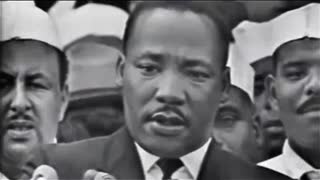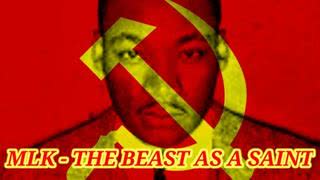
J&D, W&T, Jan 19, 2026, MLK; Canadian EmergencyAct; SundayMeetup; MaxIgan; MandatoryHoaxEd; BiblicalEndTimes;White Kids
Holotruther
Published on Jan 19, 2026
*** The Beast as Saint: The Truth About "Martin Luther King, Jr." (MAIN ARTICLES BELOW)
http://www.martinlutherking.org/thebeast.html
*** HUGE VICTORY FOR FREEDOM OF SPEECH & FREEDOM OF ASSEMBLY: Government's use of Emergencies Act in 2022 was 'unreasonable': Court of Appeal Justin Trudeau's petulant invocation of Canada's most restrictive legislation, the Emergencies Act (successor to the War Measures Act) to deal with what was essentially a parking problem in Ottawa has been ruled unconstitutional by the Court of Appeals. (MAIN ARTICLE BELOW) https://cafe.nfshost.com/
*** SUNDAY MEETUP - Robert the Bruce presents Jim Rizoli, Diane King, Cynthia Hodges, Monika Schaefer, Kathleen Dudley, Jan 18, 2026 https://old.bitchute.com/video/s6xSn9PVuUPj/
Monika Schaefer’s Links:
freespeechmonika.com
https://republicbroadcasting.org/the-flip-side-with-monika/
https://www.republicbroadcastingarchives.org/category/monika-schaefer/
Book: https://barnesreview.org/product/sorry-mom-i-was-wrong-about-the-holocaust/
https://truthandjusticeforgermans.com/
Monika Schaefer, published her book: SORRY MOM, I WAS WRONG ABOUT THE HOLOCAUST, Jan 3, 2023 - https://old.bitchute.com/video/Xh3g9IhMSXM5/
MONIKA SCHAEFER: "I'm sorry, Mom, I was WRONG about the holocaust." Short video
https://old.bitchute.com/video/NYlSaS1Etiik/
*** Max Igan, WALK AND TALK, Jan 18, 2026 - (First 3 min, TRUMP, JEW TOOL)
*** Mandatory holohoax education
*** Biblical end times
*** If you are having ‘white’ kids - TRAIN THEM!!!
****************
****************
The Beast as Saint: The Truth About "Martin Luther King, Jr."
http://www.martinlutherking.org/thebeast.html
WHEN THE COMMUNISTS TOOK OVER a country, one of the first things that they did was to confiscate all the privately-held weapons, to deny the people the physical ability to resist tyranny. But even more insidious than the theft of the people's weapons was the theft of their history. Official Communist "historians" rewrote history to fit the current party line. In many countries, revered national heroes were excised from the history books, or their real deeds were distorted to fit Communist ideology, and Communist killers and criminals were converted into official "saints." Holidays were declared in honor of the beasts who murdered countless nations.
Did you know that much the same process has occurred right here in America? Every January, the media go into a kind of almost spastic frenzy of adulation for the so-called "Reverend Doctor Martin Luther King, Jr." King has even had a national holiday declared in his honor, an honor accorded to no other American, not Washington, not Jefferson, not Lincoln. (Washington and Lincoln no longer have holidays -- they share the generic-sounding "President's Day.") A liberal judge has sealed the FBI files on King until the year 2027. What are they hiding? Let's take a look at this modern-day plastic god.
Born in 1929, King was the son of a Black preacher known at the time only as "Daddy King." "Daddy King" named his son Michael. In 1935, "Daddy King" had an inspiration to name himself after the Protestant reformer Martin Luther. He declared to his congregation that henceforth they were to refer to him as "Martin Luther King" and to his son as "Martin Luther King, Jr." None of this name changing was ever legalized in court. "Daddy" King's son's real name is to this day Michael King.
King's Brazen Cheating: We read in Michael Hoffman's "Holiday for a Cheater": The first public sermon that King ever gave, in 1947 at the Ebenezer Baptist Church, was plagiarized from a homily by Protestant clergyman Harry Emerson Fosdick entitled "Life is What You Make It," according to the testimony of King's best friend of that time, Reverend Larry H. Williams. The first book that King wrote, "Stride Toward Freedom, - -was plagiarized from numerous sources, all unattributed, according to documentation recently assembled by sympathetic King scholars Keith D. Miller, Ira G. Zepp, Jr., and David J. Garrow. And no less an authoritative source than the four senior editors of "The Papers of Martin Luther King, Jr.- - (an official publication of the Martin Luther King Center for Nonviolent Social Change, Inc., whose staff includes King's widow Coretta), stated of King's writings at both Boston University and Crozer Theological Seminary: "Judged retroactively by the standards of academic scholarship, [his writings] are tragically flawed by numerous instances of plagiarism.... Appropriated passages are particularly evident in his writings in his major field of graduate study, systematic theology."
King's essay, "The Place of Reason and Experience in Finding God," written at Crozer, pirated passages from the work of theologian Edgar S. Brightman, author of "The Finding of God." Another of King's theses, "Contemporary Continental Theology," written shortly after he entered Boston University, was largely stolen from a book by Walter Marshall Horton. King's doctoral dissertation, "A Comparison of the Conceptions of God in the Thinking of Paul Tillich and Harry Nelson Wieman," for which he was awarded a PhD in theology, contains more than fifty complete sentences plagiarized from the PhD dissertation of Dr. Jack Boozer, "The Place of Reason in Paul Tillich's Concept of God." According to "The Martin Luther King Papers", in King's dissertation "only 49 per cent of sentences in the section on Tillich contain five or more words that were King's own...."! In "The Journal of American History", June 1991, page 87, David J. Garrow, a leftist academic who is sympathetic to King, says that King's wife, Coretta Scott King, who also served as his secretary, was an accomplice in his repeated cheating. ("King's Plagiarism: Imitation, Insecurity and Transformation," The Journal of American History, June 1991, p. 87) Reading Garrow's article, one is led to the inescapable conclusion that King cheated because he had chosen for himself a political role in which a PhD would be useful, and, lacking the intellectual ability to obtain the title fairly, went after it by any means necessary. Why, then, one might ask, did the professors at Crozer Theological Seminary and Boston University grant him passing grades and a PhD? Garrow states on page 89: "King's academic compositions, especially at Boston University, were almost without exception little more than summary descriptions... and comparisons of other's writings. Nonetheless, the papers almost always received desirable letter grades, strongly suggesting that King's professors did not expect more...." The editors of "The Martin Luther King Jr. Papers" state that "...the failure of King's teachers to notice his pattern of textual appropriation is somewhat remarkable...."
But researcher Michael Hoffman tells us "...actually the malfeasance of the professors is not at all remarkable. King was politically correct, he was Black, and he had ambitions. The leftist [professors were] happy to award a doctorate to such a candidate no matter how much fraud was involved. Nor is it any wonder that it has taken forty years for the truth about King's record of nearly constant intellectual piracy to be made public." Supposed scholars, who in reality shared King's vision of a racially mixed and Marxist America, purposely covered up his cheating for decades. The cover-up still continues. From the "New York Times" of October 11, 1991, page 15, we learn that on October 10th of that year, a committee of researchers at Boston University admitted that, "There is no question but that Dr. King plagiarized in the dissertation." However, despite its finding, the committee said that "No thought should be given to the revocation of Dr. King's doctoral degree," an action the panel said "would serve no purpose." No purpose, indeed! Justice demands that, in light of his willful fraud as a student, the "reverend" and the "doctor" should be removed from King's name.
Communist Beliefs and Connections: Well friends, he is not a legitimate reverend, he is not a bona fide PhD, and his name isn't really "Martin Luther King, Jr." What's left? Just a sexual degenerate, an America-hating Communist, and a criminal betrayer of even the interests of his own people. On Labor Day, 1957, a special meeting was attended by Martin Luther King and four others at a strange institution called the Highlander Folk School in Monteagle, Tennessee. The Highlander Folk School was a Communist front, having been founded by Myles Horton (Communist Party organizer for Tennessee) and Don West (Communist Party organizer for North Carolina). The leaders of this meeting with King were the aforementioned Horton and West, along with Abner Berry and James Dumbrowski, all open and acknowledged members of the Communist Party, USA. The agenda of the meeting was a plan to tour the Southern states to initiate demonstrations and riots.
From 1955 to 1960, Martin Luther King's associate, advisor, and personal secretary was one Bayard Rustin. In 1936 Rustin joined the Young Communist League at New York City College. Convicted of draft-dodging, he went to prison for two years in 1944. On January 23, 1953 the "Los Angeles Times" reported his conviction and sentencing to jail for 60 days for lewd vagrancy and homosexual perversion. Rustin attended the 16th Convention of the Communist Party, USA in February, 1957. One month later, he and King founded the Southern Christian Leadership Conference, or SCLC for short. The president of the SCLC was Dr. Martin Luther King, Jr. The vice-president of the SCLC was the Reverend Fred Shuttlesworth, who was also the president of an identified Communist front known as the Southern Conference Educational Fund, an organization whose field director, a Mr. Carl Braden, was simultaneously a national sponsor of the Fair Play for Cuba Committee, of which you may have heard. The program director of the SCLC was the Reverend Andrew Young, in more recent years Jimmy Carter's ambassador to the UN and mayor of Atlanta. Young, by the way, was trained at the Highlander Folk School, previously mentioned.
Soon after returning from a trip to Moscow in 1958, Rustin organized the first of King's famous marches on Washington. The official organ of the Communist Party, "The Worker,- - openly declared the march to be a Communist project. Although he left King's employ as secretary in 1961, Rustin was called upon by King to be second in command of the much larger march on Washington which took place on August 28, 1963. Bayard Rustin's replacement in 1961 as secretary and advisor to King was Jack O'Dell, also known as Hunter Pitts O'Dell. According to official records, in 1962 Jack O'Dell was a member of the National Committee of the Communist Party, USA. He had been listed as a Communist Party member as early as 1956. O'Dell was also given the job of acting executive director for SCLC activities for the entire Southeast, according to the St. Louis "Globe-Democrat - -of October 26, 1962. At that time, there were still some patriots in the press corps, and word of O'Dell's party membership became known.
What did King do? Shortly after the negative news reports, King fired O'Dell with much fanfare. And he then, without the fanfare, "immediately hired him again- - as director of the New York office of the SCLC, as confirmed by the "Richmond News-Leader - -of September 27, 1963. In 1963 a Black man from Monroe, North Carolina named Robert Williams made a trip to Peking, China. Exactly 20 days before King's 1963 march on Washington, Williams successfully urged Mao Tse-Tung to speak out on behalf of King's movement. Mr. Williams was also around this time maintaining his primary residence in Cuba, from which he made regular broadcasts to the southern US, three times a week, from high-power AM transmitters in Havana under the title "Radio Free Dixie." In these broadcasts, he urged violent attacks by Blacks against White Americans. During this period, Williams wrote a book entitled "Negroes With Guns." The writer of the foreword for this book? None other than Martin Luther King, Jr. It is also interesting to note that the editors and publishers of this book were to a man all supporters of the infamous Fair Play for Cuba Committee.
According to King's biographer and sympathizer David J. Garrow, "King privately described himself as a Marxist." In his 1981 book, "The FBI and Martin Luther King, Jr.", Garrow quotes King as saying in SCLC staff meetings, "...we have moved into a new era, which must be an era of revolution.... The whole structure of American life must be changed.... We are engaged in the class struggle." Jewish Communist Stanley Levison can best be described as King's behind-the-scenes "handler." Levison, who had for years been in charge of the secret funnelling of Soviet funds to the Communist Party, USA, was King's mentor and was actually the brains behind many of King's more successful ploys. It was Levison who edited King's book, "Stride Toward Freedom." It was Levison who arranged for a publisher. Levison even prepared King's income tax returns! It was Levison who really controlled the fund-raising and agitation activities of the SCLC. Levison wrote many of King's speeches. King described Levison as one of his "closest friends."
FBI: King Bought Sex With SCLC Money: The Federal Bureau of Investigation had for many years been aware of Stanley Levison's Communist activities. It was Levison's close association with King that brought about the initial FBI interest in King. Lest you be tempted to believe the controlled media's lie about "racists" in the FBI being out to "get" King, you should be aware that the man most responsible for the FBI's probe of King was Assistant Director William C. Sullivan. Sullivan describes himself as a liberal, and says that initially "I was one hundred per cent for King...because I saw him as an effective and badly needed leader for the Black people in their desire for civil rights." The probe of King not only confirmed their suspicions about King's Communist beliefs and associations, but it also revealed King to be a despicable hypocrite, an immoral degenerate, and a worthless charlatan.
According to Assistant Director Sullivan, who had direct access to the surveillance files on King which are denied the American people, King had embezzled or misapplied substantial amounts of money contributed to the "civil rights" movement. King used SCLC funds to pay for liquor, and numerous prostitutes both Black and White, who were brought to his hotel rooms, often two at a time, for drunken sex parties which sometimes lasted for several days. These types of activities were the norm for King's speaking and organizing tours. In fact, an outfit called The National Civil Rights Museum in Memphis, Tennessee, which is putting on display the two bedrooms from the Lorraine Motel where King stayed the night before he was shot, has declined to depict in any way the "occupants - -of those rooms. That "according to exhibit designer Gerard Eisterhold "would be "close to blasphemy." The reason? Dr. Martin Luther King, Jr. spent his last night on Earth having sex with two women at the motel and physically beating and abusing a third. Sullivan also stated that King had alienated the affections of numerous married women. According to Sullivan, who in 30 years with the Bureau hadáseen everything there was to be seen of the seamy side of life, King was one of only seven people he had ever encountered who was such a total degenerate.
Noting the violence that almost invariably attended King's supposedly "non-violent" marches, Sullivan's probe revealed a very different King from the carefully crafted public image. King welcomed members of many different Black groups as members of his SCLC, many of them advocates and practitioners of violence. King's only admonition on the subject was that they should embrace "tactical nonviolence." Sullivan also relates an incident in which King met in a financial conference with Communist Party representatives, not knowing that one of the participants was an infiltrator actually working for the FBI.
J. Edgar Hoover personally saw to it that documented information on King's Communist connections was provided to the President and to Congress. And conclusive information from FBI files was also provided to major newspapers and news wire services. But were the American people informed of King's real nature? No, for even in the 1960s, the fix was in "the controlled media and the bought politicians were bound and determined to push their racial mixing program on America. King was their man and nothing was going to get in their way. With a few minor exceptions, these facts have been kept from the American people. The pro-King propaganda machine grinds on, and it is even reported that a serious proposal has been made to add some of King's writings as a new book in the Bible.
Ladies and gentlemen, the purpose of this radio program is far greater than to prove to you the immorality and subversion of this man called King. I want you to start to think for yourselves. I want you to consider this: What are the forces and motivation behind the controlled media's active promotion of King? What does it tell you about our politicians when you see them, almost without exception, falling all over themselves to honor King as a national hero? What does it tell you about our society when any public criticism of this moral leper and Communist functionary is considered grounds for dismissal? What does it tell you about the controlled media when you see how they have successfully suppressed the truth and held out a picture of King that can only be described as a colossal lie? You need to think, my fellow Americans. You desperately need to wake up.
Sources:
1. The Papers of Martin Luther King, Jr.- - (an official publication of the Martin Luther King Center for Nonviolent Social Change).
2. "King's Plagiarism: Imitation, Insecurity and Transformation," The Journal of American History, June 1991, p. 87) David J. Garrow
3. New York Times" of October 11, 1991, page 15.
4. "The FBI and Martin Luther King, Jr.", David J. Garrow, (1981).
5. "And the walls came tumbling down," Rev. Ralph Abernathy (1989
http://truth-out.org/news/item/21281-martin-luther-king-was-a-radical-not-a-saint
***************
Martin Luther King Was a Radical, Not a Saint Monday, 20 January 2014 10:27 By Peter Dreier, Truthout | News Analysis
President Lyndon B. Johnson and Rev. Dr. Martin Luther King, Jr. meet at the White House, 1966. (Photo: Lyndon Baines Johnson Library and Museum ) The official US beatification of Martin Luther King has come at the heavy price of silence about his radical espousal of economic justice and anticolonialism. It is easy to forget that in his day, in his own country, Rev. Martin Luther King Jr. was considered a dangerous troublemaker. Even President John Kennedy worried that King was being influenced by Communists. King was harassed by the FBI and vilified in the media. The establishment's campaign to denigrate King worked. In August 1966 - as King was bringing his civil rights campaign to Northern cities to address poverty, slums, housing segregation and bank lending discrimination - the Gallup Poll found that 63 percent of Americans had an unfavorable opinion of King, compared with 33 percent who viewed him favorably. Today Rev. Martin Luther King Jr. is viewed as something of an American saint. The most recent Gallup Poll discovered that 94 percent of Americans viewed him in a positive light. His birthday is a national holiday. His name adorns schools and street signs. In 1964, at age 35, he was the youngest person to receive the Nobel Peace Prize. Americans from across the political spectrum invoke King's name to justify their beliefs and actions. In fact, King was a radical. He believed that America needed a "radical redistribution of economic and political power." He challenged America's class system and its racial caste system. He was a strong ally of the nation's labor union movement. He was assassinated in April 1968 in Memphis, where he had gone to support a sanitation workers' strike. He opposed US militarism and imperialism, especially the country's misadventure in Vietnam.
In his critique of American society and his strategy for changing it, King pushed the country toward more democracy and social justice. If he were alive today, he would certainly be standing with Walmart employees and other workers fighting for a living wage and the right to unionize. He would be in the forefront of the battle for strong gun controls and to thwart the influence of the National Rifle Association. He would protest the abuses of Wall Street banks, standing side-by-side with homeowners facing foreclosure and crusading for tougher regulations against lending rip-offs. He would be calling for dramatic cuts in the military budget to reinvest public dollars in jobs, education and health care. He would surely be marching with immigrants and their allies in support of comprehensive immigration reform. He would be joining hands with activists seeking to reduce racial profiling by police and ending the mass incarceration of young people. Like most Americans in his day, King was homophobic, even though one of his closest advisors, Bayard Rustin, was gay. But today, King would undoubtedly stand with advocates of LGBT rights and same-sex marriage, just as he challenged state laws banning interracial marriage.
Indeed, King's views evolved over time. He entered the public stage with some hesitation, reluctantly becoming the spokesperson for the Montgomery bus boycott in 1955, at the age of 26. King began his activism in Montgomery as a crusader against racial segregation, but the struggle for civil rights radicalized him into a fighter for broader economic and social justice and peace. Still, in reviewing King's life, we can see that the seeds of his later radicalism were planted early. King was born in Atlanta, Georgia, in 1929, the son of a prominent black minister. Despite growing up in a solidly middle-class family, King saw the widespread human suffering caused by the Depression, particularly in the black community. In 1950, while in graduate school, he wrote an essay describing the "anticapitalistic feelings" he experienced as a youngster as a result of seeing unemployed people standing in breadlines. During King's first year at Morehouse College, civil rights and labor activist A. Philip Randolph spoke on campus. Randolph predicted that the near future would witness a global struggle that would end white supremacy and capitalism. He urged the students to link up with "the people in the shacks and the hovels," who, although "poor in property," were "rich in spirit."
After graduating from Morehouse in 1948, King studied theology at Crozer Theological Seminary in Pennsylvania (where he read both Mohandas Gandhi and Karl Marx), planning to follow in his father's footsteps and join the ministry. In 1955, he earned his doctorate from Boston University, where he studied the works of Reinhold Niebuhr, the influential liberal theologian. While in Boston, he told his girlfriend (and future wife), Coretta Scott, that "a society based on making all the money you can and ignoring people's needs is wrong."
When King moved to Montgomery to take his first pulpit at the Dexter Avenue Baptist Church, he was full of ideas but had no practical experience in politics or activism. But history sneaked up on him. On Thursday, December 1, 1955, Rosa Parks, a seamstress and veteran activist with the National Association for the Advancement of Colored People (NAACP), decided to resist the city's segregation law by refusing to move to the back of the bus on her way home from work. She was arrested. Two other long-term activists - E. D. Nixon (leader of the NAACP and of the Brotherhood of Sleeping Car Porters) and Jo Ann Robinson (a professor at the all-black Alabama State College and a leader of Montgomery's Women's Political Council) - determined that Parks' arrest was a ripe opportunity for a one-day boycott of the much-despised segregated bus system. Nixon and Robinson asked black ministers to use their Sunday sermons to spread the word. Some refused, but many others, including King, agreed. The boycott was very effective. Most black residents stayed off the buses. Within days, the boycott leaders formed a new group, the Montgomery Improvement Association (MIA). At Nixon's urging, they elected a hesitant King as president, in large part because he was new in town and not embroiled in the competition for congregants and visibility among black ministers. He was also well educated and already a brilliant orator, and thus would be a good public face for the protest movement. The ministers differed over whether to call off the boycott after one day but agreed to put the question up to a vote at a mass meeting. That night, 7,000 blacks crowded into (and stood outside) the Holt Street Baptist Church. Inspired by King's words - "There comes a time when people get tired of being trampled over by the iron feet of oppression" - they voted unanimously to continue the boycott. It lasted for 381 days and resulted in the desegregation of the city's buses. During that time, King honed his leadership skills, aided by advice from two veteran pacifist organizers, Bayard Rustin and Rev. Glenn Smiley, who had been sent to Montgomery by the pacifist group, Fellowship of Reconciliation. During the boycott, King was arrested, his home was bombed, and he was subjected to personal abuse. But - with the assistance of the new medium of television - he emerged as a national figure.
In 1957, King launched the Southern Christian Leadership Conference (SCLC) to help spread the civil rights crusade to other cities. He helped lead local campaigns in different cities, including Selma and Birmingham, Alabama, where thousands marched to demand an end to segregation in defiance of court injunctions forbidding any protests. While participating in these protests, King also sought to keep the fractious civil rights movement together, despite the rivalries among the NAACP, the Urban League, the Student Nonviolent Coordinating Committee (SNCC), the Congress of Racial Equality (CORE) and SCLC. Between 1957 and 1968, King traveled over six million miles, spoke more than 2,500 times, and was arrested at least 20 times, always preaching the gospel of nonviolence. King attended workshops at the Highlander Folk School in Tennessee, which connected him to a network of radicals, pacifists and union activists from around the country whose ideas helped widen his political horizons.
It is often forgotten that the August 1963 protest rally at the Lincoln Memorial, where King delivered his famous "I Have a Dream" speech, was called the March on Washington for Jobs and Freedom. King was proud of the civil rights movement's success in winning the passage of the Civil Rights Act in 1964 and the Voting Rights Act the following year. But he realized that neither law did much to provide better jobs or housing for the masses of black poor in either the urban cities or the rural South. "What good is having the right to sit at a lunch counter," he asked, "if you can't afford to buy a hamburger?" King had hoped that the bus boycott, sit-ins and other forms of civil disobedience would stir white southern moderates, led by his fellow clergy, to see the immorality of segregation and racism. His famous "Letter from a Birmingham Jail," written in 1963, outlines King's strategy of using nonviolent civil disobedience to force a response from the southern white establishment and to generate sympathy and support among white liberals and moderates. "The purpose of our direct-action program is to create a situation so crisis-packed that it will inevitably open the door to negotiation," he wrote, and added, "We know through painful experience that freedom is never voluntarily given by the oppressor; it must be demanded by the oppressed."
King eventually realized that many white Americans had at least a psychological stake in perpetuating racism. He began to recognize that racial segregation was devised not only to oppress African Americans but also to keep working-class whites from challenging their own oppression by letting them feel superior to blacks. "The Southern aristocracy took the world and gave the poor white man Jim Crow," King said from the Capitol steps in Montgomery, following the 1965 march from Selma. "And when his wrinkled stomach cried out for the food that his empty pockets could not provide, he ate Jim Crow, a psychological bird that told him that no matter how bad off he was, at least he was a white man, better than a black man." When King launched a civil rights campaign in Chicago in 1965, he was shocked by the hatred and violence expressed by working-class whites as he and his followers marched through the streets of segregated neighborhoods in Chicago and its suburbs. He saw that the problem in Chicago's ghetto was not legal segregation but "economic exploitation" - slum housing, overpriced food and low-wage jobs - "because someone profits from its existence." These experiences led King to develop a more radical outlook. King supported President Lyndon B. Johnson's declaration of the War on Poverty in 1964, but, like his friend and ally Walter Reuther, the president of the United Auto Workers, King thought that it did not go nearly far enough. As early as October 1964, he called for a "gigantic Marshall Plan" for the poor - black and white. Two months later, accepting the Nobel Peace Prize in Oslo, he observed that the United States could learn much from Scandinavian "democratic socialism." He began talking openly about the need to confront "class issues," which he described as "the gulf between the haves and the have-nots."
In 1966 King confided to his staff: You can't talk about solving the economic problem of the Negro without talking about billions of dollars. You can't talk about ending the slums without first saying profit must be taken out of slums. You're really tampering and getting on dangerous ground because you are messing with folk then. You are messing with captains of industry. Now this means that we are treading in difficult water, because it really means that we are saying that something is wrong with capitalism. There must be a better distribution of wealth, and maybe America must move toward a democratic socialism. Given this view, King was dismayed when Malcolm X, SNCC's Stokely Carmichael, and others began advocating "black power," which he warned would alienate white allies and undermine a genuine interracial movement for economic justice. King became increasingly committed to building bridges between the civil rights and labor movements. Invited to address the AFL-CIO's annual convention in 1961, King observed. The labor movement did not diminish the strength of the nation but enlarged it. By raising the living standards of millions, labor miraculously created a market for industry and lifted the whole nation to undreamed of levels of production. Those who today attack labor forget these simple truths, but history remembers them. In a 1961 speech to the Negro American Labor Council, King proclaimed, "Call it democracy, or call it democratic socialism, but there must be a better distribution of wealth within this country for all God's children." Speaking to a meeting of Teamsters union shop stewards in 1967, King said, "Negroes are not the only poor in the nation. There are nearly twice as many white poor as Negro, and therefore the struggle against poverty is not involved solely with color or racial discrimination but with elementary economic justice."
King's growing critique of capitalism coincided with his views about American imperialism. By 1965 he had turned against the Vietnam War, viewing it as an economic as well as a moral tragedy. But he was initially reluctant to speak out against the war. He understood that his fragile working alliance with LBJ would be undone if he challenged the president's leadership on the war. Although some of his close advisers tried to discourage him, he nevertheless made the break in April 1967, in a bold and prophetic speech at the Riverside Church in New York City, entitled "Beyond Vietnam - A Time to Break Silence." King called America the "greatest purveyor of violence in the world today" and linked the struggle for social justice with the struggle against militarism. King argued that Vietnam was stealing precious resources from domestic programs and that the Vietnam War was "an enemy of the poor." In his last book, Where Do We Go from Here: Chaos or Community? (1967), King wrote, "The bombs in Vietnam explode at home; they destroy the hopes and possibilities for a decent America."
In early 1968, King told journalist David Halberstam, "For years I labored with the idea of reforming the existing institutions of society, a little change here, a little change there. Now I feel quite differently. I think you've got to have a reconstruction of the entire society, a revolution of values." King kept trying to build a broad movement for economic justice that went beyond civil rights. In January, 1968, he announced plans for a Poor People's Campaign, a series of protests to be led by an interracial coalition of poor people and their allies among the middle-class liberals, unions, religious organizations and other progressive groups, to pressure the White House and Congress to expand the War on Poverty. At King's request, socialist activist Michael Harrington (author of The Other America, which helped inspire Presidents Kennedy and Johnson to declare a war on poverty) drafted a Poor People's Manifesto that outlined the campaign's goals. In April, King was in Memphis, Tennessee, to help lend support to striking African American garbage workers and to gain recognition for their union. There, he was assassinated, at age 39, on April 4, a few months before the first protest action of the Poor People's Campaign in Washington, DC. President Johnson utilized this national tragedy to urge Congress to quickly enact the Fair Housing Act, legislation to ban racial discrimination in housing, which King had strongly supported for two years. He signed the bill a week after King's assassination. The campaign for a federal holiday in King's honor, spearheaded by Detroit Congressman John Conyers, began soon after his murder, but it did not come up for a vote in Congress until 1979, when it fell five votes short of the number needed for passage. In 1981, with the help of singer Stevie Wonder and other celebrities, supporters collected six million signatures on a petition to Congress on behalf of a King holiday. Congress finally passed legislation enacting the holiday in 1983, 15 years after King's death. But even then, 90 members of the House (including then-Congressmen John McCain of Arizona and Richard Shelby of Alabama, both now in the Senate) voted against it. Senator Jesse Helms, a North Carolina Republican, led an unsuccessful effort - supported by 21 other senators, including current Senator Charles Grassley (R-Iowa) - to block its passage in the Senate.
The holiday was first observed on January 20, 1986. In 1987, Arizona governor Evan Mecham rescinded King Day as his first act in office, setting off a national boycott of the state. Some states (including New Hampshire, which called it "Civil Rights Day" from 1991 to 1999) insisted on calling the holiday by other names. In 2000, South Carolina became the last state to make King Day a paid holiday for all state employees. In his final speech in Memphis the night before he was killed, King told the crowd about a bomb threat on his plane from Atlanta that morning, saying he knew that his life was constantly in danger because of his political activism.
"I would like to live a long life," he said. "Longevity has its place. But I'm not concerned about that now. I just want to do God's will. And he's allowed me to go up to the mountain, and I've looked over, and I've seen the promised land. I may not get there with you. But I want you to know tonight that we as a people will get to the promised land." We haven't gotten there yet. But Dr. King is still with us in spirit. The best way to honor his memory is to continue the struggle for human dignity, workers' rights, racial equality, peace and social justice.
This essay is adapted from the entry for Martin Luther King in Peter Dreier's book, The 100 Greatest Americans of the 20th Century: A Social Justice Hall of Fame.
**********
**********
HUGE VICTORY FOR FREEDOM OF SPEECH & FREEDOM OF ASSEMBLY: Government's use of Emergencies Act in 2022 was 'unreasonable': Court of Appeal Justin Trudeau's petulant invocation of Canada's most restrictive legislation, the Emergencies Act (successor to the War Measures Act) to deal with what was essentially a parking problem in Ottawa has been ruled unconstitutional by the Court of Appeals.
Government's use of Emergencies Act in 2022 was 'unreasonable': Court of Appeal. Justin Trudeau's petulant invocation of Canada's most restrictive legislation, the Emergencies Act (successor to the War Measures Act) to deal with what was essentially a parking problem in Ottawa has been ruled unconstitutional by the
Federal l Court of Appeal. This is an important victory for freedom of speech and freedom of assembly. We hope it has real life consequences. CAFE demands that:
1. All convictions of truckers and their supporters be pardoned.
2. Those people who suffered jail time unable to get bail -- Tamara Lich and others -- should receive financial compensation.
3. Those who suffered the freezing by complicit banks of their bank accounts be compensated financially.
4. The politicians who imposed this vile police state act on Canadians, especially Justin Trudeau and Chrystia Freeland be sued for violation of Canadians' civil rights. Story by Jim Bronskill 5 min read
Trucks are seen in front of the Chateau Laurier hotel as a protest marked by gridlock and blaring horns reached its 14th day in Ottawa on Thursday, Feb. 10, 2022. THE CANADIAN PRESS/Justin Tang © The Canadian Press
OTTAWA — The Federal Court of Appeal has ruled it was unreasonable for the Liberal government to use the Emergencies Act four years ago to quell protests in the national capital and at key border points. The decision issued Friday affirms a 2024 Federal Court ruling that rejected use of the emergencies law and found invocation of the act led to the infringement of constitutional rights. The Federal Court of Appeal said the government lacked a basis to declare that the events across Canada posed a threat to national security or amounted to a national emergency — requirements that must be satisfied to invoke the Emergencies Act. For about three weeks in January and February 2022, downtown Ottawa was filled with protesters, including many in large trucks that blocked streets around Parliament Hill. The usually placid city core was beset by blaring horns from big rigs, diesel fumes, makeshift encampments and even a hot tub and bouncy castle as protest participants settled in. The influx of people, including some with roots in the far-right movement, prompted many businesses to temporarily shut down and aggravated residents with noise, pollution and harassing behaviour.
Public anger mounted over a lack of enforcement action by Ottawa police.
Related video: Federal Court of Appeal rules use of Emergencies Act during 2022 'Freedom Convoy' protests was unreasonable (Global News) Many in large trucks blocked streets around Parliament Hill
Global News, Federal Court of Appeal rules use of Emergencies Act during 2022 'Freedom Convoy' protests was unreasonable. While many people demonstrated against COVID-19 health restrictions, the protest attracted some with a variety of grievances against then-prime minister Justin Trudeau and his government. Trucks also jammed key border crossings to the United States, including routes at Windsor, Ont., and Coutts, Alta.
On Feb. 14, 2022, the government invoked the Emergencies Act, which allowed for temporary measures, including regulation and prohibition of public assemblies, the designation of secure places, direction to banks to freeze assets, and a ban on support for protest participants. It was the first time the law had been used since it replaced the War Measures Act in 1988. In a Feb. 15 letter to premiers, Trudeau said the federal government believed it had reached a point "where there is a national emergency arising from threats to Canada's security.''
The Public Order Emergency Commission, which carried out a mandatory review after the use of the act, concluded in early 2023 that the federal government had met the very high legal standard for using the law.
The Trudeau government's move was also scrutinized in Federal Court. The Canadian Civil Liberties Association and several other groups and individuals argued in court that Ottawa lacked sound statutory grounds to usher in the emergency measures. The government contended the steps taken to deal with the turmoil were targeted, proportional and time-limited, and complied with the Charter of Rights and Freedoms.
Richard Mosley, the Federal Court judge who heard the case, concluded the federal decision to issue the proclamation did not bear the hallmarks of reasonableness — justification, transparency and intelligibility — and was not supported in relation to the relevant factual and legal constraints. Ultimately, there "was no national emergency justifying the invocation of the Emergencies Act," Mosley said in his January 2024 ruling. He also found the regulations barring participation in public assemblies violated the Charter guarantee of free expression. He said the scope of the regulations was overbroad and captured people "who simply wanted to join in the protest by standing on Parliament Hill carrying a placard." He also cited the federal government's failure to require that "some objective standard be satisfied" before bank accounts were frozen, concluding this breached the Charter prohibition against unreasonable search or seizure. The federal government appealed the decision, saying it was unfair to fault federal decision-making using "20/20 hindsight." The three-judge Federal Court of Appeal panel said that as disturbing and disruptive as the blockades and the "Freedom Convoy" protests in Ottawa could be, "they fell well short of a threat to national security." The Court of Appeal said this was borne out by the Canadian Security Intelligence Service's own assessment, and the judges pointed to the fact that although an alternative threat assessment was requested, the Emergencies Act was invoked before it could be completed. The Emergencies Act defines a national emergency as an urgent and critical situation of a temporary nature that seriously endangers the lives, health or safety of Canadians, exceeds the capacity or authority of a province to deal with it and cannot be effectively dealt with under any other law of Canada.
The Court of Appeal concluded the government "did not have reasonable grounds to believe that a national emergency existed," taking into account the wording of the act, its constitutional underpinning and the record that was before it at the time the decision was made. The judges said the failure to meet the requirements to declare a public order emergency led them to conclude the federal proclamation "was unreasonable" and exceeded the bounds of legal authority. Conservative Leader Pierre Poilievre said on social media Friday that by upholding the Federal Court's decision, the Federal Court of Appeal is upholding Charter rights. "When this Liberal government divides people and violates their freedoms of thought, belief, opinion and expression, it loses," Poilievre said. "A Conservative Government will ensure the Emergencies Act can never be used again to silence political opposition." Canadian Civil Liberties Association executive director Howard Sapers said the court decision will force governments to consider in future how they meet the legislative thresholds in the Emergencies Act. "This decision provides some guidance and some guardrails in terms of interpreting the legislation, refining the understanding of it," he said during a media conference Friday. "The act could still be used and a government could still try to abuse it, but at least now there's some there's some precedent decision."
It was not clear Friday whether the federal government would seek leave to appeal the ruling to the Supreme Court of Canada. Simon Lafortune, a spokesman for Public Safety Minister Gary Anandasangaree, said the government was reviewing the ruling and assessing next steps. He said the government "remains steadfast in its commitment to ensuring the safety and security of Canadians." This report by The Canadian Press was first published Jan. 16, 2026. Jim Bronskill, The Canadian Press
Add to
Flag Video
Rate video
Rate video
Up next
Recommended
-
Watch Later
 02:10:15
‘Woke’ MLK ‘penis’ statue insults Black community: Coretta Scott-King’s kin
182 views 912 days ago -
Watch Later
 00:01
00:01 -
Watch Later
 00:01
00:01Martin Luther King Jr. Remembrance | MLK Day of Service 2026 Special
193 views 44 days ago -
Watch Later
 00:01
00:01 -
Watch Later
 00:01
00:01