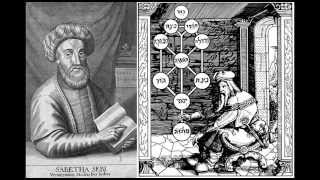
BANNED History of Sabbatai Zevi and 1666

Seeker4Truth
Published on Sep 1, 2022
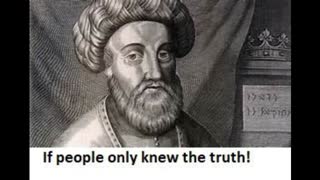
"Sabbatai Zevi was a Sephardic ordained rabbi from Smyrna. A kabbalist of Romaniote origin, Zevi, who was active throughout the Ottoman Empire, claimed to be the long-awaited Jewish Messiah. He was the founder of the Sabbatean movement, whose followers subsequently were to be known as Dönmeh or crypto-Jews."
https://en.wikipedia.org/wiki/Sabbatai_Zevi.
Sabbatai Zevi (Hebrew: שַ×בְּתַי צְבִי, other spellings Shabbetai Ẓevi, ShabbeṯÄy á¹¢eḇī, Shabsai Tzvi, and Sabetay Sevi in Turkish) (August 1, 1626 – c.September 17, 1676 was a Sephardic ordained rabbi from Smyrna (modern day Izmir, Turkey).] A kabbalist of Romaniote origin,[4] Zevi, who was active throughout the Ottoman Empire, claimed to be the long-awaited Jewish Messiah. He was the founder of the Sabbatean movement, whose followers subsequently were to be known as Dönmeh or crypto-Jews.
In February 1666, upon arriving in Constantinople, Sabbatai was imprisoned on the order of the grand vizier Ahmed Köprülü; in September of that same year, after being moved from different prisons around the capital to Adrianople (the imperial court's seat) for judgement on accusations of fomenting sedition, Sabbatai was given by Köprülü, in the name of the Sultan Mehmed IV, the choice of either facing death by some type of ordeal, or of converting to Islam. Sabbatai seems to have chosen the latter by donning from then on a Turkish turban. He was then also rewarded by the heads of the Ottoman state with a generous pension for his compliance with their political and religious plans.[6] Some of his followers also converted to Islam—about 300 families who were known as the Dönmeh (converts). As the Ottomans tired of his schemes, he was banished twice, first to Constantinople and, when he was discovered singing psalms with the Jews, to a small town known today as Ulcinj in present-day Montenegro. He later died in isolation.
Claims of messiahship
Apart from this general Messianic belief, there was another computation, based on an interpreted passage in the Zohar (a famous Jewish mystical text), and particularly popular among the Jews, according to which the year 1648 was to be the year of Israel's redemption by their long-awaited Jewish Messiah.
At age 22 in 1648, Sabbatai started declaring to his followers in Smyrna that he was the true Messianic redeemer. In order to prove this claim he started to pronounce the Tetragrammaton, an act which Judaism emphatically prohibited to all but the Jewish high priest in the Temple in Jerusalem on the Day of Atonement. For scholars acquainted with rabbinical, and kabbalistic literature, the act was highly symbolic. He would also claim that he could fly, but explained to his beholders that he couldn't do so in public because they were 'not worthy enough' to witness the sight. So too, he declared regularly that he was having various visions of God.[14] He revealed his Messiahship early on to Isaac Silveyra and Moses Pinheiro, the latter a brother-in-law of the Italian rabbi and kabbalist Joseph Ergas.
However, at this point he was still relatively young to be thought of as an accepted and established rabbinic authority; and his influence in the local community was not widespread. Even though Sabbatai had led the pious life of a mystic in Smyrna for several years, the older and more established rabbinic leadership was still suspicious of his activities. The local college of rabbis, headed by his teacher, Joseph Escapa, kept a watchful eye on him. When his Messianic pretensions became too bold, they put him and his followers under cherem, a type of excommunication in Judaism.
About the year 1651 (according to others, 1654), the rabbis banished Sabbatai and his disciples from Smyrna. It is not certain where he went from there. By 1658, he was in Constantinople, where he met a preacher, Abraham Yachini (a disciple of Joseph di Trani), who confirmed Sabbatai's messianic mission. Yachini is said to have forged a manuscript in archaic characters which, he alleged, bore testimony to Sabbatai's Messiahship.[9] It was entitled "The Great Wisdom of Solomon", and began:
"I, Abraham, was confined in a cave for forty years, and I wondered greatly that the time of miracles did not arrive. Then was heard a voice proclaiming, 'A son will be born in the Hebrew year 5386 [the year 1626 CE] to Mordecai Zevi; and he will be called Shabbethai. He will humble the great dragon; ... he, the true Messiah, will sit upon My throne."
Another Key Player: Nathan of Gaza
1. The Reptilian Truth & Satanic Rulers:
https://www.bitchute.com/video/Z1rBGcgJyqcD/
****************************************************************
DISCLAIMER: "Copyright Disclaimer Under Section 107 of the Copyright Act 1976, allowance is made for "fair use" for purposes such as criticism, comment, news reporting, teaching, scholarship, and research. Fair use is a use permitted by copyright statute that might otherwise be infringing. Non-profit, educational or personal."
Add to
Flag Video
Rate video
Rate video
Up next
Autoplay
Recommended
-
Watch Later
 20:47
20:471666 and the Dark Jewish Messiah Sabbatai Zevi - ROBERT SEPEHR
87 views 123 days ago -
Watch Later
 09:28
09:28Islamic Account of Sabbatai Zevi and the secularization and fall of turkey (OTTOMAN EMPIRE)
824 views 1878 days ago -
Watch Later
 00:01
00:01Freemasonry and Satanism, book review 109 pt 1, Encyclopaedia Judaica - Shabbetai Zevi
1K views 1707 days ago