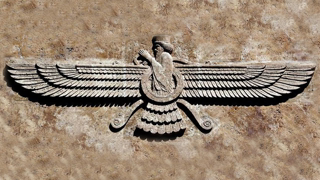
Morocco has one of the largest jewish diasporas in the world, # in many countries around the globe

Adolf Goebbels
Published on Mar 17, 2023
Morocco has one of the largest and most influential diasporas in the world, with a presence in many countries around the globe. This diaspora has the potential to act in various fields, such as culture, commerce, foreign relations, and conflict resolution. One of the important components of the Moroccan diaspora is the Jewish community, which has left its mark on Moroccan culture for centuries, living in harmony with their Muslim and Christian fellow citizens.
According to estimates, the Jewish population in Morocco reached about 250,000 people at the beginning of the 20th century, representing nearly 10% of the country's total population. Moroccan Jews have been present in the country since antiquity, but they experienced a period of prosperity and peace under the Alaouite dynasty starting in the 17th century. During this period, Jews held important positions in administration, commerce, crafts, and agriculture.
Although most Jews emigrated to Israel and other countries after the creation of the State of Israel in 1948, many Moroccan Jews chose to stay in Morocco and contributed to the country's development. Today, Moroccan Jews are scattered around the world, mainly in Israel, France, the United States, Canada, and Latin America, but they have managed to maintain their cultural traditions and heritage. They have also contributed to the economic and cultural development of Morocco, particularly in the fields of crafts, tourism, and agriculture.
The Moroccan Jewish community has also played an important role in promoting interreligious dialogue and combating anti-Semitism. Indeed, Morocco is known for being a tolerant and open country to other religions, allowing Moroccan Jews to live in harmony with their Muslim and Christian neighbors for centuries. Today, many Moroccan Jews participate in interreligious dialogue initiatives and work to promote tolerance and mutual understanding among different communities.
One notable example of the Moroccan Jewish community's contribution to interfaith dialogue is the annual International Forum for the Alliance of Civilizations, held in Marrakech, Morocco. The forum brings together prominent figures from different religions and backgrounds to discuss issues related to cultural diversity, conflict resolution, and global cooperation. Moroccan Jews, along with Muslims, Christians, and other religious groups, have played an active role in the forum's success and have contributed to promoting interfaith dialogue on a global scale.
In addition to their contribution to interfaith dialogue, Moroccan Jews have also played a significant role in shaping the country's cultural heritage. Moroccan Jewish musicians, such as Samy Elmaghribi and Zohra El Fassia, have made significant contributions to Moroccan music, fusing Jewish and Moroccan musical styles to create a unique sound. Moroccan Jews have also made important contributions to the country's culinary heritage, with dishes such as tagine with prunes and almonds, a traditional Jewish dish that has become popular among all Moroccans.
Overall, the Moroccan Jewish community is a valuable resource for Morocco and the world, possessing a rich cultural heritage and expertise in various fields. The community's contribution to promoting interfaith dialogue and cultural diversity is essential in creating a more tolerant and peaceful world. As Morocco continues to develop and engage with the global community, the Jewish community's contributions are essential to the country's success and prosperity.
References:
"Moroccan Jews: A Brief History" by Rabbi Allen S. Maller, Jewish Virtual Library, accessed on March 3, 2023, https://www.jewishvirtuallibrary.org/moroccan-jews-a-brief-history
"Morocco - Jews," Country Studies, accessed on March 3, 2023, http://countrystudies.us/morocco/49.htm
"The Jews of Morocco: Ancient Roots, Uncertain Future," by Paula M. Pickering, The Middle East Journal, accessed on March 3, 2023, https://www.jstor.org
arabe
Add to
Flag Video
Rate video
Rate video
Up next
Recommended
-
Watch Later
 16:42
16:42 -
Watch Later
 00:01
00:01Full Documentary "Chasing Madoff" Largest Jewish Ponzi Fraud, second largest is Jeffrey Epstein
599 views 1867 days ago -
Watch Later
![[Chasing Prophecy] David Weiss is out to convince everyone around the globe, the earth is flat.]() 00:01
00:01[Chasing Prophecy] David Weiss is out to convince everyone around the globe, the earth is flat.
440 views 1462 days ago -
Watch Later
![All around the world everybody knows (White countries for everyone)]() 02:54
02:54All around the world everybody knows (White countries for everyone)
625 views 1593 days ago

![[Chasing Prophecy] David Weiss is out to convince everyone around the globe, the earth is flat.](https://goyimtv.st/f_data/data_userfiles/user_media/3383146814/t/2933818727/1.jpg?1)