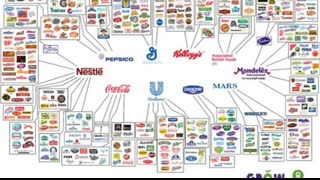
Who owns big business: the rise of passive investors (@uvaCORPNET)

lababouche
Published on Jan 24, 2023
Follow us: https://twitter.com/UvACORPNET
When the financial market crashed, investors fundamentally changed the way they buy stocks. Before, they invested in actively managed funds -- funds that buy shares in companies that they think will outperform the market. After the crisis passively managed funds -- funds that buy shares of all companies of an index -- grew rapidly. In the USA, the three biggest passive investors (Blackrock, Vanguard and State Street) already constitute the single largest shareholder in 40% of all listed firms, and 88% of the S&P500 index.
With the ownership of shares come voting rights, allowing them to have a leading voice in important matters such as executive compensation or on who runs the corporation. What are the consequences of this shift in corporate ownership? This question is central to the scientists of the CORPNET research team (http://corpnet.uva.nl/).
You can read the paper at https://papers.ssrn.com/sol3/papers.cfm?abstract_id=2798653.
This movie was made with the cooperation of Public Cinema: http://www.public-cinema.com/.
You can follow us on Twitter: CORPNET (https://twitter.com/UvACORPNET), AISSR (https://twitter.com/uva_aissr).
Add to
Flag Video
Rate video
Rate video
Up next
Recommended
-
Watch Later
 00:01
00:01 -
Watch Later
 00:01
00:01There's no Business like Shoah Business - more Jews telling the truth.
1.2K views 1963 days ago -
Watch Later
![the Jews the Jews the Jews cancel your Netflix now who owns Netflix the Jews]() 00:01
00:01the Jews the Jews the Jews cancel your Netflix now who owns Netflix the Jews
2.9K views 2001 days ago -
Watch Later
![Pastor Jimenez Thug Life (Pastor Jimenez Owns the Media) Classic]() 00:35
00:35Pastor Jimenez Thug Life (Pastor Jimenez Owns the Media) Classic
931 views 1812 days ago -
Watch Later
![Monopoly - Follow The Money - A Very Comprehensive Presentation Of Who Owns The World]() 00:01
00:01Monopoly - Follow The Money - A Very Comprehensive Presentation Of Who Owns The World
596 views 1765 days ago -
Watch Later
![Freemasonry and Satanism, book review 33 pt 2 , Who really owns your gold]() 00:01
00:01Freemasonry and Satanism, book review 33 pt 2 , Who really owns your gold
378 views 1754 days ago