Fliegermarsch [Austrian march]
WeedNoseTheWise
Published on Aug 27, 2022
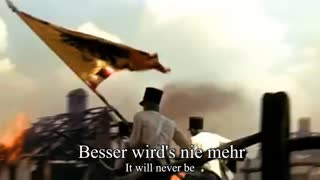
The creator of the flying march was the Austrian composer Hermann Dostal, who wrote it in 1912 under the title "Kerzengrad steig ich zum Himmel" as the vocal piece of a balloonist for his otherwise forgotten operetta "The Flying Captain". Dostal dedicated the aviator march in the first version to the flying corps of the Danube monarchy. Dostal's operetta with the aviator's march of 1912 belongs to music history in the time of the Viennese operetta. During this time, the Viennese operetta had the reputation of mass entertainment, which was later discussed with the cultural industry.
The aviator's march was not originally set for wind band, but became increasingly a classic march in the brass band. Today, the aviator's march is one of the most played pieces in the Bundeswehr and is also part of the repertoire of military music. In general, the aviator's march belongs to the repertoire of wind orchestras in music clubs.
Entertainment musicians such as James Last and André Rieu have worked on the aviator's march in their respective style, and laymen's orchestras also like to sing this march. The text of the flying march (see below) is also part of the repertoire of choral music in which the character of the Austrian operetta of 1912 becomes audible.
Disclaimer: All videos are apolitical and this channel is against any form of extremism or hatespeech!
â—▬▬▬▬▬▬▬▬▬✠∠SUPPORT âˆâœ ▬▬▬▬▬▬▬▬▬â—
â– Patreon: https://www.patreon.com/arminius1871
Add to
Flag Video
Rate video
Rate video
Up next
Autoplay
Recommended
-
Watch Later
 02:15
02:15Austrian MP Shows Even A Can Of Coke Tests Positive On Covid Test
1.1K views 1907 days ago -
Watch Later
 00:01
00:01FULLY VAXXED 28 YEAR OLD AUSTRIAN MP COLLAPSES MID SPEECH DURING PARLIAMENT
771 views 1603 days ago -
Watch Later
![Zelensky losing support in West? Austrian MPs walkout during Ukrainian president's speech]() 02:57
02:57Zelensky losing support in West? Austrian MPs walkout during Ukrainian president's speech
306 views 1068 days ago
![Giskra-Marsch [Austrian march]](https://goyimtv.st/f_data/data_userfiles/user_media/1316733067/t/2836196556/1.jpg?1)
![Fröhlich-Marsch [Austrian march]](https://goyimtv.st/f_data/data_userfiles/user_media/1316733067/t/3951646720/1.jpg?1)